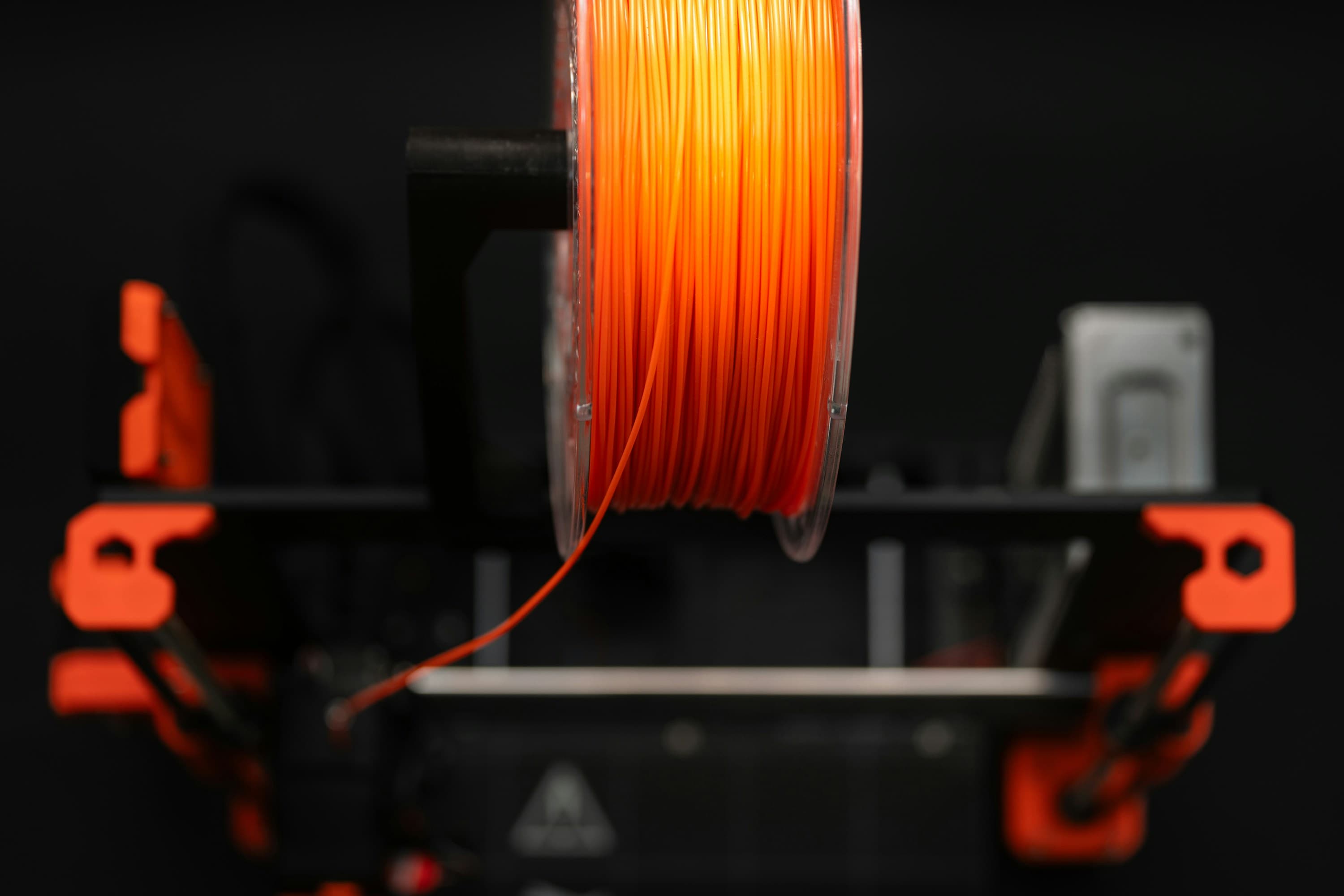
If you’ve been printing in PETG and it’s working great, you might wonder why anyone would bother switching. The answer is simple: put a PETG part in direct sunlight for a few months and see what happens.
PETG doesn’t handle UV exposure well. It yellows, gets brittle, and eventually fails. For anything that lives outside — a garden fixture, a car mount, a mailbox bracket — you need something built for it. That’s ASA.
What Is ASA Filament?
ASA stands for Acrylonitrile Styrene Acrylate. It’s chemically similar to ABS — same strength, similar print settings — but with one critical difference: it’s specifically engineered to resist UV radiation and weathering.
Where ABS uses butadiene rubber in its chemistry (which breaks down under UV exposure), ASA swaps that for acrylic ester rubber. That single change makes ASA dramatically more stable in sunlight. It won’t yellow, won’t get brittle, and won’t lose its mechanical properties after months outdoors.
Think of ASA as ABS that actually belongs outside.
ASA vs PETG: What’s the Difference?
If you’re coming from PLA and PETG, here’s how ASA fits in:
| PETG | ASA | |
|---|---|---|
| UV resistance | Poor | Excellent |
| Heat resistance | ~75–80°C | ~95–100°C |
| Weather resistance | Moderate | Excellent |
| Strength | Good | Good |
| Ease of printing | ⭐⭐⭐⭐ | ⭐⭐⭐ |
| Enclosure required | No | Yes (recommended) |
| Typical price | $14–26/kg | $20–26/kg |
The two big wins for ASA: UV resistance and higher heat deflection temperature (~95°C vs PETG’s ~75°C). That heat resistance matters more than you’d think — a part sitting in a car in summer can easily see 80°C+, which is right at PETG’s limit.
The One Catch: You Need an Enclosure
This is the main reason people stick with PETG longer than they should. ASA, like ABS, warps badly on open-air printers. The temperature differential between the hot nozzle and ambient air causes the part to curl off the bed, split at layer lines, or delaminate entirely.
An enclosed printer solves this by keeping the ambient temperature elevated (~40–50°C inside the chamber), which reduces thermal stress during printing.
If you’re on a Bambu Lab P1S or X1C, you’re already set — both are fully enclosed. If you’re on an open-frame printer like an Ender 3, you’ll need to add an enclosure before printing ASA reliably.
This is the natural upgrade path: PLA and PETG get you far on any printer. When you need outdoor-rated parts, ASA requires the enclosed setup — which is when an enclosed printer like the P1S starts to pay for itself.
ASA Print Settings
ASA prints similarly to ABS. General starting points:
- Nozzle temp: 240–260°C
- Bed temp: 80–100°C
- Enclosure: Required for best results
- Cooling fan: Off or minimal (10–20%)
- Bed surface: PEI or garolite works well
The low cooling fan setting is important — ASA needs to cool slowly and evenly to avoid warping and layer separation. This is the opposite of PLA where you want maximum cooling.
When Should You Switch from PETG to ASA?
Use ASA when your part:
- Lives outdoors permanently (garden, yard, exterior fixtures)
- Is exposed to direct sunlight regularly
- Goes in a car (dashboard, exterior mounts, antenna brackets)
- Needs to handle temperatures above 75°C
- Needs to survive rain, humidity, and temperature cycling
Stick with PETG when:
- The part stays indoors
- UV exposure is minimal
- You don’t have an enclosure yet
- Print ease matters more than outdoor performance
My ASA Picks on Amazon
OVERTURE ASA — Amazon’s Overall Pick, 4.6 stars / 2,100+ reviews, 2K+ bought last month, ±0.02mm accuracy. Prime overnight. Best all-around choice at $19.99/kg.
ELEGOO ASA — UV & weather resistant, high impact strength, ±0.02mm accuracy, 600+ bought last month. Best value at $19.99/kg.
Polymaker ASA — 4.5 stars / 2,100+ reviews, excellent batch consistency, cardboard spool. Polymaker’s quality control is consistently good across their whole lineup. $25.99/kg.
| Pick | Best For | Price |
|---|---|---|
| OVERTURE ASA | Best overall, highest rated | $19.99/kg |
| ELEGOO ASA | Best value | $19.99/kg |
| Polymaker ASA | Premium consistency | $25.99/kg |
All available on Amazon with Prime shipping.
Frequently Asked Questions
Does ASA smell when printing? Yes — similar to ABS, ASA produces fumes during printing. Print in a ventilated area or with an enclosure that has a HEPA/activated carbon filter. Don’t print ASA in a bedroom or living space without ventilation.
Can I print ASA on a Bambu Lab P1S? Yes, the P1S is one of the best printers for ASA. The full enclosure manages chamber temperature well, and Bambu has pre-tuned profiles for ASA that work reliably out of the box.
How long will ASA last outdoors? ASA is rated for multi-year outdoor use. Real-world results vary by UV intensity and climate, but properly printed ASA parts typically last 3–5+ years outdoors without significant degradation.
Can I use ASA for car parts? Yes — ASA’s ~95°C heat deflection temperature makes it suitable for most automotive applications that aren’t directly on or near the engine. Exterior trim, antenna bases, roof rack accessories, and interior parts that see sun exposure are all good candidates.
What’s the difference between ASA and ABS? Both are similar in strength and print settings. The key difference is UV resistance — ABS degrades under prolonged UV exposure, yellowing and becoming brittle. ASA is specifically formulated to resist UV. If the part lives outside, always choose ASA over ABS.
What’s Next in the Filament Series
- PLA vs PETG: Which Should You Use? — start here if you’re new to filament
- When to Use ABS: Strength, Heat, and When It Makes Sense (coming soon)
- Why I Don’t Always Use Bambu Lab Filament (coming soon)
All product links are Amazon affiliate links. I only recommend filaments I’ve actually researched and would use myself.