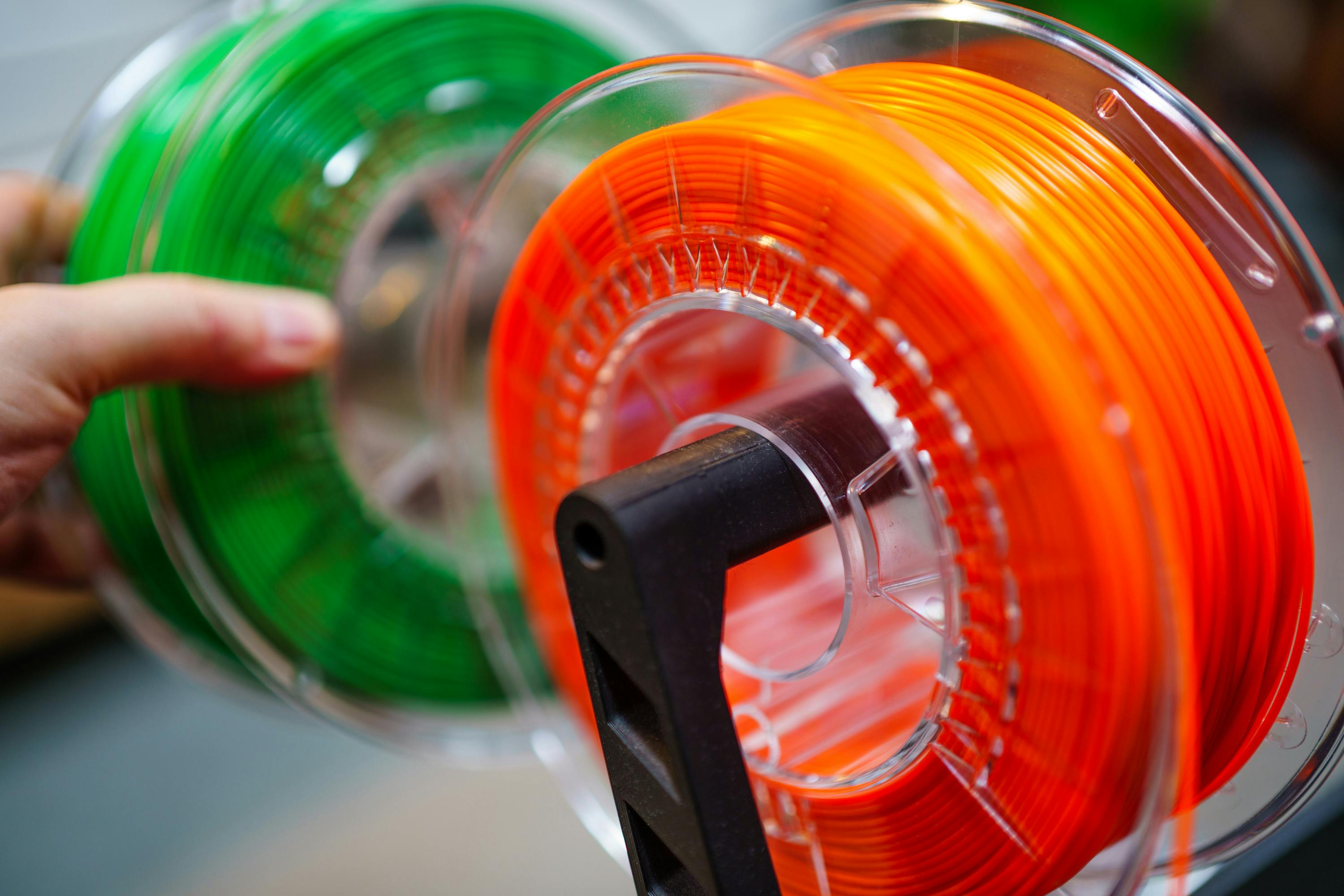
If you just got your first 3D printer and opened Amazon to buy filament, you were probably hit with dozens of options immediately. But two names keep coming up: PLA and PETG.
The good news is that these are the two best filaments to start with — and for most people, they’re the only two you’ll ever need. Here’s what they actually are, how they’re different, and which one to reach for first.
Why PLA and PETG Are the Default Starting Points
Before diving into the differences, it’s worth understanding why everyone recommends these two materials over everything else.
The short answer: they work on any printer, including open-air machines, with very few downsides.
Materials like ABS, ASA, and Nylon require an enclosed print chamber to manage temperature during printing. Without one, the print cools unevenly, warps off the bed, and often fails entirely. PLA and PETG don’t have that problem. Their lower internal stresses during cooling mean they stay put even on a completely open-frame printer like an Ender 3 or Bambu Lab A1 Mini.
This makes them the universal starting point — no enclosure, no special setup, no drama.
What Is PLA?
PLA (Polylactic Acid) is the most popular 3D printing filament in the world, and for good reason. It’s made from plant-based materials like cornstarch, prints at low temperatures (190–220°C), and is about as forgiving as filament gets.
PLA is great for:
- Decorative prints and models
- Prototypes and test fits
- Anything that stays indoors
- Your first 100 prints
Where PLA falls short:
- Low heat resistance — leaves a car in summer and it might warp (~60°C softening point)
- More brittle than PETG under impact
- Not great for outdoor use long-term
My go-to PLA picks on Amazon:
- Polymaker Panchroma Matte PLA (formerly PolyTerra) — matte finish, great for display pieces and anything you want to paint. Eco-friendly cardboard spool, prints up to 300mm/s.
- HATCHBOX PLA — one of the longest-running, most proven filaments out there. Extremely consistent, ±0.03mm accuracy.
- ELEGOO PLA — ±0.02mm accuracy, cardboard spool, and usually the cheapest PLA I track. Best value.
What Is PETG?
PETG (Polyethylene Terephthalate Glycol) sits between PLA and engineering-grade materials. It’s tougher, more flexible, and more heat resistant than PLA — but it still prints without an enclosure, which is what makes it such a useful upgrade.
Think of it as PLA’s more capable sibling. Slightly more involved to dial in, but not dramatically so.
PETG is great for:
- Functional parts that need to handle stress
- Brackets, clips, tool holders, enclosures
- Parts that see moderate heat (up to ~75–80°C)
- Anything that needs a bit of give rather than snapping
Where PETG falls short:
- Strings more than PLA — you’ll need to dial in retraction
- Slightly more sensitive to moisture (store it sealed)
- Doesn’t sand or paint as cleanly as PLA
My go-to PETG picks on Amazon:
- Polymaker PETG — high speed up to 300mm/s, warp free, excellent layer adhesion, ships with exact hex color codes.
- HATCHBOX PETG — ±0.03mm accuracy. Reliable and consistent.
- ELEGOO Rapid PETG — high speed up to 600mm/s, ±0.02mm accuracy. Best value PETG.
PLA vs PETG: Head-to-Head
| PLA | PETG | |
|---|---|---|
| Ease of printing | ⭐⭐⭐⭐⭐ | ⭐⭐⭐⭐ |
| Enclosure required | No | No |
| Heat resistance | ~60°C | ~75–80°C |
| Strength | Medium | Higher |
| Flexibility | Brittle | Slightly flexible |
| Stringing | Low | Moderate |
| Best for | Decorative, prototypes | Functional parts |
| Typical price | $14–28/kg | $20–25/kg |
Both work on any open-air printer. That’s the key takeaway — you don’t need to spend more on an enclosed machine just to use better materials at this level.
Which One Should You Use?
Start with PLA if:
- This is your first or second roll of filament
- You’re printing models, figures, or anything decorative
- You want the easiest possible experience
Switch to PETG if:
- The part needs to handle load, stress, or impact
- It’ll be near a heat source (car interior, near windows)
- You’re printing tool holders, brackets, or anything functional
Not sure? Default to PLA. It’s easier to work with and you can always reprint in PETG once you know what the part needs to do.
What About PLA+?
PLA+ is worth a quick mention. It’s a modified PLA blend with improved toughness and reduced brittleness — it bridges the gap between standard PLA and PETG. If you find yourself wanting something stronger than PLA but don’t want to deal with PETG’s stringing yet, PLA+ is a solid middle ground.
ELEGOO Rapid PLA+ is a great pick here — tougher formula, high-speed capable, and still very easy to print.
My Recommended Filament Picks (Summary)
| Pick | Material | Best For | Store price today |
|---|---|---|---|
| Polymaker Panchroma Matte PLA | PLA | Display pieces, painting | $18.99/kg |
| HATCHBOX PLA | PLA | Reliable everyday printing | $22.99/kg |
| ELEGOO PLA | PLA | Best budget option | $13.99/kg |
| Polymaker PETG | PETG | Functional parts, color accuracy | $18.99/kg |
| HATCHBOX PETG | PETG | Reliable all-rounder | $26.00/kg |
| ELEGOO Rapid PETG | PETG | Best value, high-speed | $13.99/kg |
Store prices update daily from each brand’s own website. Amazon prices often differ, so click through to check yours. Full comparison on the filament price tracker.
Frequently Asked Questions
Can I print PLA and PETG on a Bambu Lab P1S? Yes, absolutely. Both work perfectly on the P1S. You can use third-party filament without any issues — see the filament price tracker for how third-party prices compare.
Do I need a heated bed for PLA? Not always for small prints, but 50–60°C bed temp helps with adhesion and reduces warping on larger parts. PETG generally needs a heated bed at 70–85°C.
Is PLA food safe? Standard PLA is technically food-safe material, but the printing process introduces layer lines and potential contamination points. Don’t use 3D printed parts for food contact without a food-safe coating.
What’s the difference between PLA and PLA+? PLA+ uses modified binders that improve impact resistance and reduce brittleness. It’s slightly harder to print than standard PLA but still doesn’t need an enclosure. Think of it as a stepping stone toward PETG.
When should I move to ASA or ABS? When you need parts that live outdoors long-term (ASA) or need high heat resistance and structural strength (ABS). Both require an enclosed printer. Read my full guide: What is ASA Filament? When to Stop Using PETG. An ABS guide is coming soon.
All product links are Amazon affiliate links. I only recommend filaments I’ve actually used. Today’s store prices for every brand here are on the filament price tracker.