Short answer: a 1kg spool of decent PLA or PETG costs somewhere between $14 and $26 at the brand’s own store, and ASA runs a few dollars more. Right now the cheapest PLA I track is ELEGOO PLA at $13.99/kg, and the cheapest PETG is ELEGOO Rapid PETG at $13.99/kg.
That number moves, though. Filament goes on sale constantly, and the same spool can swing 20–30% in a month. So instead of writing numbers that are stale in two weeks, every price on this page is pulled from my filament price tracker, which checks each brand’s store every morning.
Here’s what you’re actually paying for, what a print really costs, and when it’s worth paying more.
Filament Cost Per Kg by Material
These are store prices for a single 1kg, 1.75mm spool. Bulk packs and Amazon prices are usually different, so tap through to check yours.
PLA
The cheapest and easiest material. Most people print 80% of their parts in it.
PETG
Usually priced right alongside PLA now. A few years ago PETG carried a premium, but the budget brands have closed that gap almost completely.
ASA
You pay a little more for UV and heat resistance. Worth it for anything that lives outside, but overkill for indoor parts. More on that in my ASA guide.
Why the Same Material Costs $14 or $26
A 1kg spool of PLA is still a 1kg spool of PLA. The spread comes from a handful of things, and only some of them matter for the parts you print.
Diameter tolerance and consistency. Budget and premium brands both advertise ±0.02–0.03mm. The real difference is spool-to-spool and batch-to-batch consistency. Premium brands tend to hold color and flow more consistently across rolls, which matters if you’re printing a matching set of parts or running a printer unattended.
The formula, not just the material. “PLA” covers a lot: basic, PLA+, high-speed, matte, silk, carbon-filled. Matte and specialty blends cost more to make, and carbon or glass-filled filaments cost a lot more (and need a hardened nozzle).
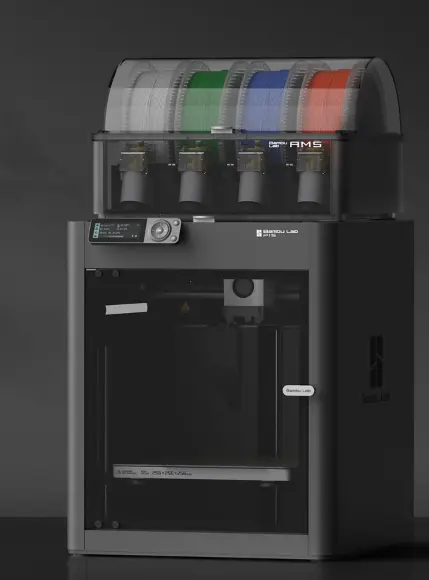
The spool itself. Cardboard spools are cheaper and lighter. Plastic spools cost more and end up in a drawer. Refills without a spool are the cheapest way to buy from brands that offer them, if your printer or AMS can use a reusable spool.
Ecosystem convenience. Some printer brands sell filament with RFID tags that auto-load settings into the AMS. It’s genuinely convenient, and you pay for it. Third-party filament works fine once you’ve dialed in a profile once.
Packaging and drying. Better vacuum sealing and desiccant mean less moisture out of the box. It matters more for PETG and nylon than for PLA.
My take: for brackets, jigs, enclosures, and prototypes, the budget spools are fine. I pay more when I need color consistency across a batch, or a specific formula like matte PLA for parts that will be on camera.
What a 3D Print Actually Costs
The material math is simple: grams of filament × price per kg ÷ 1000. Your slicer tells you the grams before you print.
At today’s cheapest PLA price, here’s what typical parts cost in filament:
| Part | Filament used | Material cost |
|---|---|---|
| Small clip or spacer | 10g | $0.14 |
| Wall bracket or tool holder | 50g | $0.70 |
| Electronics enclosure | 150g | $2.10 |
| Large functional part | 400g | $5.60 |
Costs update daily from the cheapest tracked PLA store price.
The same 150g enclosure in Polymaker ASA, for an outdoor build, costs $3.75 in material. So even the “expensive” option is rarely the expensive part of a project.
The costs your slicer doesn’t show
Waste. Supports, brims, and failed first layers add up. I budget roughly 10–15% on top of the slicer estimate for single-color prints.
Multi-color purge. If you print multi-color with an AMS or similar single-nozzle system, every color swap flushes filament. On prints with lots of color changes, the purge waste can rival the weight of the part itself. Single-color prints don’t have this problem at all.
Electricity. A desktop printer like a P1S averages around 100W or so while printing, depending on bed temperature and chamber. At California rates of roughly $0.30–0.40/kWh, that’s a few cents per hour. Even a 10-hour print is well under a dollar.
So for most functional parts, the real cost is somewhere between a few cents and a few dollars. The printer and your time are the expensive parts.
When to Buy (and When to Wait)
Filament has a lot of fake sales. A “40% off” banner sometimes just means the price went back to what it was last month. Three things actually save money:
- Watch the 90-day low. The price tracker logs every brand’s store price daily and flags when something is genuinely under its typical price, not just marked “sale.”
- Buy bulk for your workhorse color. If you go through black PLA or PETG constantly, multi-spool bundles usually beat single-spool prices by a meaningful margin.
- Don’t stockpile specialty filament. Silk, matte, and engineering materials sit for months and absorb moisture. Buy those when you have a project for them.
The Bottom Line
- PLA and PETG: roughly $14–26 per kg at brand stores, with budget brands at the low end and nearly identical PLA and PETG pricing.
- ASA: a few dollars more, worth it only for outdoor or high-heat parts.
- A typical functional part: cents to a few dollars in filament.
- Premium spools: pay for consistency when it matters, not by default.
For today’s prices across every brand I track, plus the 90-day range for each spool, check the filament price tracker. It updates every morning.
Amazon links on this page are affiliate links. Store prices are pulled from each brand’s own website and don’t include shipping or tax.